
Vicia villosa – Hairy Vetch
Explore Vicia villosa (Hairy Vetch) – its characteristics, habitat, cultivation, propagation, and functional uses and benefits.
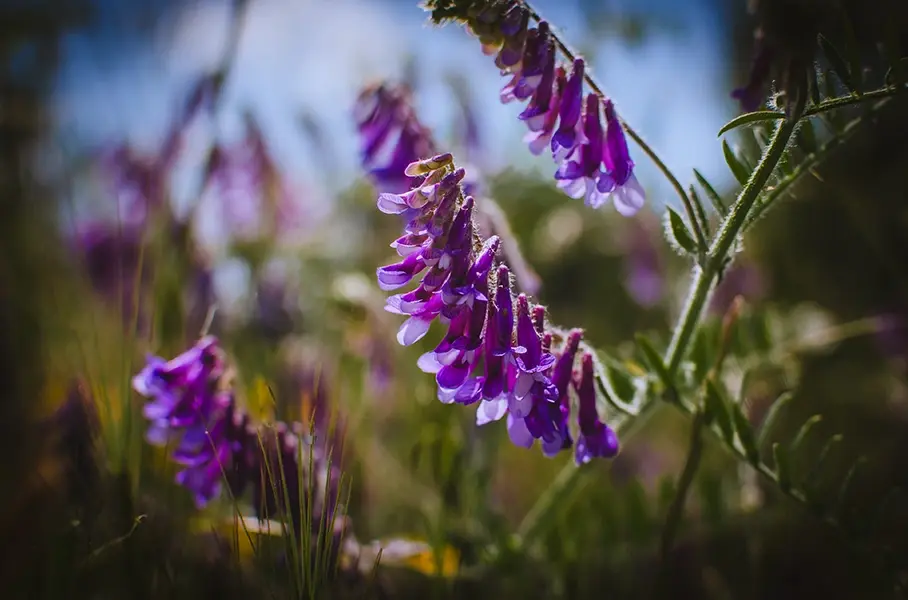
Vicia villosa | Botanical Characteristics
Common Names: Hairy Vetch, Winter Vetch
Family: Fabaceae
Appearance: A climbing or trailing annual legume with slender, hairy stems, pinnate leaves ending in branched tendrils, and clusters of purple to violet pea-like flowers followed by elongated seed pods.
Type: Annual
Evergreen / Deciduous: N/A
Layer: Groundcover
Root System: Deep taproot with extensive fibrous lateral roots and nitrogen-fixing nodules
Height: 0.3–1.5 m (when supported)
Width: 1–3 m (spreading)
Lifespan: Annual
Growth Rate: Fast
Fertility: Self-fertile
Flowers: Hermaphroditic
Pollinator: Bees and other insects
Toxicity: Seeds may be toxic to humans and livestock if consumed in large quantities due to cyanogenic compounds and other anti-nutritional factors; foliage is generally safe when grazed before seed set.
Vicia villosa | Habitat and Cultivation
Range
Native Range: Europe and western Asia
Companionship: Frequently grown with cereal crops such as rye or oats for support; combines well with other cover crops and green manures
Invasive Range: Naturalized in North America, South America, Australia, New Zealand, and parts of Africa; considered invasive in some regions
USDA Hardiness Zone: 4–10
Minimum Chill Hours Required: None
Resistance/Tolerance
Poor Soil: High tolerance
Drought: Moderate tolerance once established
Shade: Moderate tolerance
Flood: Low tolerance
Wind: Moderate tolerance
Maritime: Moderate tolerance
Air Pollution: Moderate tolerance
Fire: Low tolerance
Thriving Conditions
Sun Exposure: Full sun to partial shade
Soil Moisture: Moderate; prefers well-drained soils
Soil Type: Sandy, loamy, or clay soils with good drainage
Soil pH: 6.0–7.5
Propagation
Seeds: Yes – direct sowing is the standard method; inoculation with appropriate Rhizobium bacteria improves nitrogen fixation where absent
Division: Not applicable
Cuttings: Not applicable
Vicia villosa | Functional Uses and Benefits
Permalogica cannot take any responsibility for any adverse reactions or health effects from using plants. Always consult a professional before using plants for medicinal purposes.
Edible: Young shoots and leaves edible when cooked in small quantities; seeds are not recommended for human consumption
Medicinal: No well-documented medicinal use
Cosmetics: No
Animal Feed: Excellent forage and hay crop when harvested before seed maturity
Fiber: No
Timber: Not applicable
Firewood: Not applicable
Wind Break: No
Fence: No
Cover Crop: Yes – one of the most widely used winter cover crops and green manures
Mulch: Yes – produces abundant biomass suitable for mulch after mowing or rolling
Nitrogen Fixer: Yes – forms symbiotic associations with Rhizobium bacteria
Dynamic Accumulator: No confirmed data
Pollinator Attractor: Yes – flowers are highly attractive to bees and other pollinating insects
Pest Repellent: No
Wildlife Supporter: Provides nectar and pollen for pollinators and forage for wildlife and livestock before seed set
Sign up for our newsletter or connect with us on social media to stay up-to-date with our latest posts and permaculture inspiration.
Explore our inspiring series and posts:
Love the post? Share it with your circle, inspire your people: