
Notobasis syriaca – Syrian Thistle
Explore Notobasis syriaca (Syrian Thistle) – its characteristics, habitat, cultivation, propagation, and functional uses and benefits.
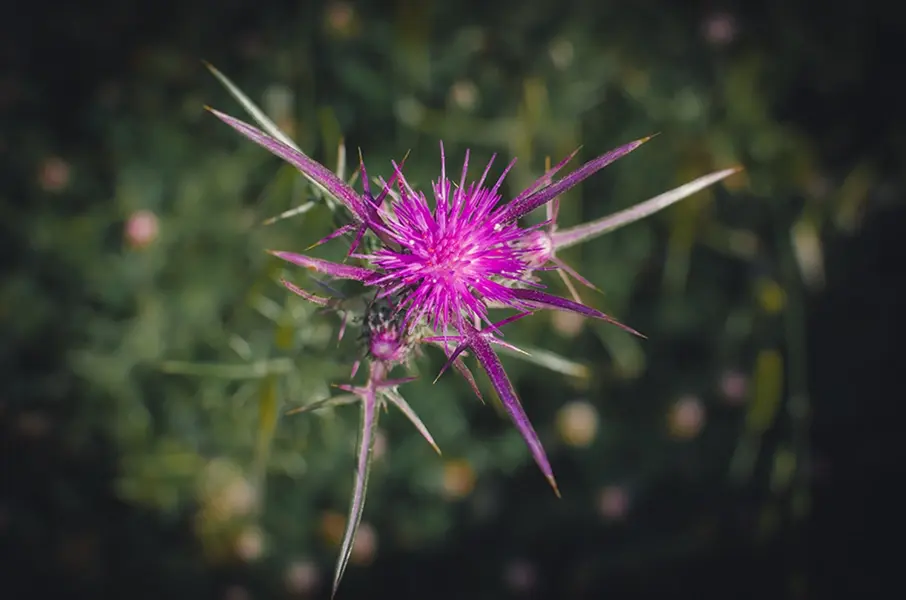
Notobasis syriaca | Botanical Characteristics
Common Names: Syrian Thistle
Family: Asteraceae
Appearance: A robust, spiny annual to biennial herb with erect, branching stems and glossy green leaves marked with white veins and armed with sharp spines. Produces solitary purple to pink thistle flower heads surrounded by spiny bracts, followed by wind-dispersed seeds with a white pappus.
Type: Annual
Evergreen / Deciduous: N/A
Layer: Herbaceous
Root System: Deep taproot with branching lateral roots
Height: 0.3–1 m
Width: 0.4–1 m
Lifespan: Annual
Growth Rate: Fast
Fertility: Self-fertile
Flowers: Hermaphroditic
Pollinator: Bees and other insects
Toxicity: Generally considered non-toxic; sharp spines may cause physical injury during handling
Notobasis syriaca | Habitat and Cultivation
Range
Native Range: Mediterranean region, Balkans, Middle East, and western Asia
Companionship: Establishes readily in disturbed ground and open grasslands; competes strongly with surrounding vegetation due to vigorous growth, prolific seeding, and allelopathic properties that can suppress the germination of nearby cereal crops
Invasive Range: Naturalized in parts of Australia and other temperate regions; considered invasive in some areas
USDA Hardiness Zone: 8–11
Minimum Chill Hours Required: None
Resistance/Tolerance
Poor Soil: High tolerance
Drought: High tolerance once established
Shade: Low tolerance – prefers full sun
Flood: Low tolerance
Wind: Moderate tolerance
Maritime: Moderate tolerance
Air Pollution: Moderate tolerance
Fire: Low tolerance
Thriving Conditions
Sun Exposure: Full sun
Soil Moisture: Low to moderate; prefers well-drained soils
Soil Type: Adaptable; sandy, loamy, rocky, or calcareous soils
Soil pH: Neutral to alkaline
Propagation
Seeds: Primary method; prolific self-seeder
Division: Not applicable
Cuttings: Not applicable
Notobasis syriaca | Functional Uses and Benefits
Permalogica cannot take any responsibility for any adverse reactions or health effects from using plants. Always consult a professional before using plants for medicinal purposes.
Edible: Young stems, leaf midribs, and immature flower heads edible after removal of spines and cooking; traditionally consumed in parts of the Mediterranean and Middle East
Medicinal: Traditionally used in folk medicine for digestive and anti-inflammatory purposes, though scientific evidence is limited
Cosmetics: No documented use
Animal Feed: Young plants may be grazed before spines develop; mature plants generally avoided by livestock. Plants grown in high-nitrogen waste soils can accumulate toxic levels of nitrates, risking nitrate poisoning in ruminants if consumed rapidly
Fiber: No
Timber: Not applicable
Firewood: Not applicable
Wind Break: No
Fence: No
Cover Crop: No
Mulch: Yes – biomass can be used as mulch after cutting
Nitrogen Fixer: No
Dynamic Accumulator: No confirmed data
Pollinator Attractor: Yes – flowers are highly attractive to bees and other pollinating insects
Pest Repellent: No
Wildlife Supporter: Provides abundant nectar and pollen for pollinators; seeds are consumed by some birds
Sign up for our newsletter or connect with us on social media to stay up-to-date with our latest posts and permaculture inspiration.
Explore our inspiring series and posts:
Love the post? Share it with your circle, inspire your people: