
Nerium oleander – Oleander
Explore Nerium oleander (Oleander) – its characteristics, habitat, cultivation, propagation, and functional uses and benefits.
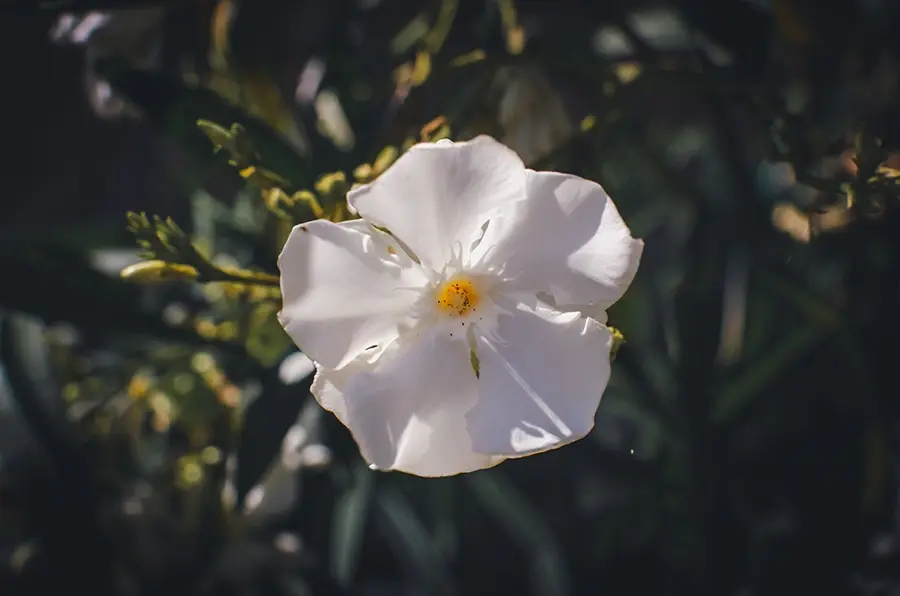
Nerium oleander | Botanical Characteristics
Common Names: Oleander, Rosebay
Family: Apocynaceae
Appearance: A dense evergreen shrub or small tree with leathery, lance-shaped leaves arranged in pairs or whorls. Produces abundant clusters of showy flowers in shades of white, pink, red, yellow, or salmon throughout the warm season.
Type: Perennial
Evergreen / Deciduous: Evergreen
Layer: Shrub
Root System: Deep, extensive root system
Height: 2–6 m
Width: 2–5 m
Lifespan: Long-lived
Growth Rate: Fast
Fertility: Self-fertile
Flowers: Hermaphroditic
Pollinator: Bees, butterflies, moths, and other insects
Toxicity: Extremely toxic; all parts of the plant contain cardiac glycosides and can be fatal if ingested by humans or animals
Nerium oleander | Habitat and Cultivation
Range
Native Range: Mediterranean region, Middle East, and South Asia
Companionship: Best used in ornamental plantings and boundary hedges; toxicity generally discourages grazing animals
Invasive Range: Naturalized in many warm regions worldwide; not generally considered highly invasive
USDA Hardiness Zone: 8–11
Minimum Chill Hours Required: None
Resistance/Tolerance
Poor Soil: High tolerance
Drought: High tolerance once established
Shade: Moderate tolerance
Flood: Moderate tolerance
Wind: High tolerance
Maritime: High tolerance
Air Pollution: High tolerance
Fire: Moderate tolerance – capable of resprouting after fire or severe pruning
Thriving Conditions
Sun Exposure: Full sun to partial shade
Soil Moisture: Low to moderate; tolerates dry conditions once established
Soil Type: Adaptable; sandy, loamy, rocky, or clay soils with adequate drainage
Soil pH: Slightly acidic to alkaline
Propagation
Seeds: Yes, though not commonly used for cultivars
Division: Not applicable
Cuttings: Semi-hardwood cuttings root readily and are the primary propagation method
Nerium oleander | Functional Uses and Benefits
Permalogica cannot take any responsibility for any adverse reactions or health effects from using plants. Always consult a professional before using plants for medicinal purposes.
Edible: No
Medicinal: Historically used medicinally, but highly toxic and unsafe for self-medication. Modern science only studies it under strict laboratory isolation (like the compound oleandrin).
Cosmetics: Commercially used in patented anti-aging skincare lines (such as NAE-8 extract) and studied for topical acne treatments.
Animal Feed: Not suitable; highly toxic to livestock and pets
Fiber: Limited use from stem fibers
Timber: No significant timber value
Firewood: No – toxic smoke may be produced when burned
Wind Break: Yes – effective due to dense evergreen growth
Fence: Yes – commonly used as a living hedge or screen
Cover Crop: No
Mulch: No
Nitrogen Fixer: No
Dynamic Accumulator: No confirmed data
Pollinator Attractor: Yes – flowers attract bees, butterflies, and other insects
Pest Repellent: No
Wildlife Supporter: Provides shelter and nesting habitat for some birds; limited food value due to the plant's high toxicity
Sign up for our newsletter or connect with us on social media to stay up-to-date with our latest posts and permaculture inspiration.
Explore our inspiring series and posts:
Love the post? Share it with your circle, inspire your people: